Why Use Solar Panel Lights Indoors?

Why Use Solar Panel Lights Indoors? The answer begins with a small panel, a rechargeable battery, and a room that needs gentle light. Solar Panel Lights Indoor can brighten a hallway, shed, reading nook, or windowless corner without adding another wired fixture. But indoor use has a catch: panels need useful light to recharge, and ordinary room lighting is usually too weak. A panel placed behind dusty glass may collect even less. Small details matter.

For transparency, no verified expert quotation was supplied for this introduction. The following is an illustrative statement, not a documented quote, from a fictional solar-lighting designer named Maya Chen: “Match the panel to real daylight, not to the room’s brightness.” It captures a practical point. A sunny windowsill can help, while a deep interior room may leave the battery undercharged. Check the product’s charging method, battery capacity, runtime, and whether the panel connects by cable. Test it for several days. Notice the difference.

These lights can suit low-demand spaces where flexible placement matters more than continuous, high-output illumination. A warm glow beside a coat rack feels useful; a dim lamp expected to light an entire kitchen may disappoint. Shade, season, window direction, and daily use all affect results. Solar lighting is not automatically cheaper or greener in every setup, either. Battery replacement and product lifespan deserve attention. The idea is promising, but the room must fit the system.
Why Use Solar Panel Lights Indoors?

What Indoor Solar Panel Lights Are and How They Work

Indoor solar panel lights use a photovoltaic panel, a rechargeable battery, and an LED lamp. The panel converts sunlight into electrical energy. A charge controller manages that energy and helps prevent the battery from overcharging. When the light sensor detects darkness, the stored power runs the LED.

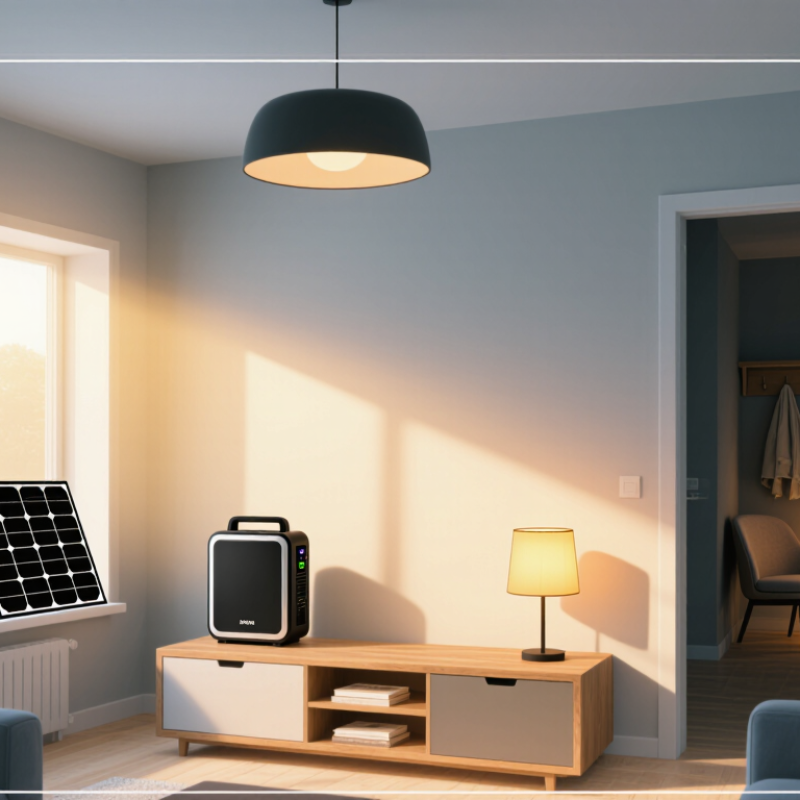
The panel may be built into the lamp or connected by a cable. A separate panel can sit outdoors or beside a bright, unobstructed window, while the lamp stays inside. Placement matters. Ordinary window glass reduces the sunlight reaching a panel, and cloudy weather can lower charging time. A dim hallway window may not provide enough power for reliable evening lighting.

No direct sun? Expect less runtime.

Check the panel’s recommended charging conditions and the battery’s stated capacity before choosing a location. Keep the panel clean; dust on its surface can block light. In practice, indoor solar lighting works best for modest needs, such as a bedside lamp or a small entryway light.

I would not assume it can replace a main ceiling fixture. Its performance depends on the available daylight, and that can be surprisingly hard to judge by eye.

Key Benefits of Using Solar Lights Indoors

Why Use Solar Panel Lights Indoors?

Key Benefits of Using Solar Lights Indoors

Solar lights can bring daylight-charged power to hallways, sheds, bedrooms, and rooms with unreliable grid access. A small panel can sit outdoors in direct sun, while a cable feeds an indoor lamp. Portable solar lanterns offer another option: charge them outside, then carry them where needed. In practice, this can reduce dependence on wall outlets and provide useful light during outages. No fuel is burned at the point of use. A practical difference.

Pairing solar power with efficient LEDs helps stretch stored energy. The U.S. Department of Energy’s Energy Saver guidance reports that LEDs use at least 75% less energy and last up to 25 times longer than incandescent bulbs. That matters when a compact battery must cover several evenings. Still, indoor solar lighting has limits. A panel behind a window may receive much less useful sunlight than one outdoors, and cloudy days can leave batteries undercharged. Not magic. Check the panel’s placement, battery capacity, and lamp runtime against actual room use; a dim landing light may be enough, while a desk lamp needs steadier output. That trade-off is easy to overlook.

Why Use Solar Panel Lights Indoors?

A solar-charged indoor light can reduce the electricity drawn from the grid during use.

Illustrative calculation: one 3 W LED used 4 hours daily for 365 days uses 4.38 kWh from the grid; a solar-charged light draws no grid electricity for that lighting use, assuming its battery is fully charged by solar energy. Place the panel where it receives adequate daylight, since indoor charging can be slower.

Common Indoor Uses for Solar-Powered Lighting

Solar-powered lighting can make indoor spaces easier to use without adding a new connection to household wiring. A common setup places the solar panel outdoors or in a sunny window, then runs a cable to an indoor light. A dim room cannot charge a panel well. That detail matters.

Hallways and entryways are useful locations for solar lights, especially where a switch is inconvenient or an outlet is far away. A motion-activated fixture can provide brief light while someone carries groceries or checks a doorway. In closets and pantries, a small light can reveal labels, shoes, or items tucked on a high shelf. Short tasks suit these spaces.

Solar-powered lamps and lanterns can also serve as backup lighting during an outage. A charged unit near a bedside table or kitchen counter is easier to find than a flashlight buried in a drawer. Check the light’s runtime and charging instructions; cloudy days and shaded windows can reduce available power. Not every room gets enough sun. I would avoid relying on one small panel for an entire home, and placement may take a little trial and error.

Factors to Consider When Choosing Indoor Solar Lights

Why Use Solar Panel Lights Indoors?

Factors to Consider When Choosing Indoor Solar Lights

Start with the panel’s access to daylight. A small panel behind a north-facing window may charge slowly, especially in winter. Direct sunlight outdoors is usually stronger, but a cable can connect an indoor lamp to a panel placed near a sunny window or outside. Check the cable length and whether the panel can be positioned securely.

Match brightness and runtime to the task. A soft light may suit a hallway, while reading or detailed work needs more usable brightness. Compare the stated runtime with how many hours the light must stay on; settings and battery age can change real results. Measure the spot. Check the label.

Battery capacity matters, but so does charging time. If the room stays shaded, a larger battery will not solve an ongoing lack of sunlight. Look for clear information about charging conditions, battery replacement, and any indoor-use limits. Warm or cool light can also affect comfort: test the color near your usual furniture, if possible. I would not assume a lamp will perform as advertised in every room; a few cloudy days can expose a weak fit.

Why Use Solar Panel Lights Indoors? - Factors to Consider When Choosing Indoor Solar Lights

Factor What to Check Practical Guidance
Indoor lighting needs Room function, desired brightness, and how many hours the light will be used Estimate the room’s lighting needs before choosing a light. A reading or work area generally needs more focused illumination than a hallway or accent-lighting area.
Brightness and beam spread Light output in lumens, beam angle, and mounting height Compare lumen ratings, but remember that lumens alone do not show how evenly a room will be lit. Beam shape and distance from the surface also matter.
Solar panel location Whether the panel can be placed outdoors or in another location with strong, direct sunlight A separate panel with a connecting cable can let the light stay indoors while the panel receives sunlight outside. Check cable length and installation requirements.
Window charging Window direction, shading, glazing, and the amount of direct sunlight reaching the panel Charging behind glass can be less effective than direct outdoor exposure. Results vary with the glass, sunlight, season, and panel design; test the intended location before relying on it.
Sun exposure and seasonal variation Daily sunlight at the panel location and changes in weather or season Solar charging depends on available sunlight. Shading, cloudy weather, and shorter winter days can reduce the energy collected and the light’s available runtime.
Battery capacity Battery capacity, battery type, replacement options, and charging instructions Higher capacity can store more energy, but actual runtime also depends on brightness, battery condition, and system efficiency. Follow the product’s specified charging and replacement guidance.
Runtime and brightness settings Rated operating time at each brightness level and whether the light has a timer or dimmer Check the manufacturer’s runtime conditions. A lower brightness setting typically uses less energy and may extend operation between charges.
Light color and color rendering Color temperature in kelvins (K) and color rendering index (CRI) Warm-white light is often preferred for relaxing spaces, while neutral or cool-white light may suit task areas. A higher CRI can make colors appear more natural.
Controls and automatic operation On/off switch, motion sensor, dusk sensor, timer, and manual override Choose controls that match the room. A motion sensor can conserve stored energy in a passageway, while a manual switch can be useful for scheduled indoor use.
Installation and cable routing Mounting method, panel cable length, access to the panel, and safe cable placement Confirm that the panel can reach a sunny location without creating a trip hazard or pinching the cable. Check whether the light and panel are intended for the chosen mounting position.
Indoor and outdoor suitability Product instructions, temperature limits, and any stated water-resistance rating Use the light and panel only in locations permitted by their instructions. A water-resistance rating applies under specified conditions and does not automatically mean a product is suitable for every outdoor location.
Backup and reliability Whether the light can be charged another way and how it behaves after several low-sunlight days If dependable lighting is essential, consider a model with an alternative charging option or keep a separate backup light available.

Note: Charging performance and runtime vary with panel placement, sunlight, battery condition, settings, and product design. Check the manufacturer’s specifications and test the system in its intended location.

Limitations and Maintenance of Indoor Solar Lighting

Why Use Solar Panel Lights Indoors?

Limitations and Maintenance of Indoor Solar Lighting

Indoor solar lights can brighten a hallway or shelf without adding another outlet. Their main limitation is simple: the panel needs strong, regular light to recharge. A panel placed behind tinted glass or far from a sunny window may collect too little energy. Winter days and cloudy weather can reduce charging time, too. Small batteries may then provide only a few hours of light. Not always enough. These lights work best as accent or backup lighting, rather than dependable task lighting for reading or cooking.

Tips: Put the panel near a bright, unobstructed window and check its position at different times of day. Wipe dust from the panel with a soft, dry cloth. Keep the light and cable away from damp spots, and follow the maker’s instructions for battery care.

Charging performance can change gradually, so compare how long the light runs after a full day of charging. If it dims sooner, check for dust, shade, or a loose connection before replacing anything. Batteries also wear out over time; use only the specified replacement type. One detail is easy to overlook: a sunny windowsill may charge well but leave the light poorly placed. Testing both positions takes patience, but it gives a more realistic sense of whether indoor solar lighting suits your room.

Go to Top