
Top Outdoor Circuit Breaker Manufacturers in China

China has become a major manufacturing base for medium- and high-voltage electrical equipment. Its suppliers serve utility, renewable energy, industrial, and infrastructure projects worldwide. This article examines leading Outdoor Circuit Breaker manufacturers through a practical, evidence-based lens.

MarketsandMarkets’ Circuit Breaker Market report projects steady global growth through 2029. The report connects demand with grid expansion, renewable integration, and industrial electrification. The International Energy Agency’s World Energy Investment 2024 report also identifies electricity networks as a critical investment area. China’s ongoing transmission and distribution upgrades reinforce this demand. However, market estimates differ between research firms. Readers should treat forecasts as indicators, not guarantees.

A credible manufacturer must demonstrate more than production capacity. Key checks include IEC 62271 compliance, applicable GB standards, type-test certificates, and traceable quality records. Outdoor equipment also requires reliable insulation, corrosion resistance, sealing, and stable operation during temperature changes. Factory audits can reveal details that brochures hide. Specifications matter. Site experience matters more.

The manufacturers selected for this guide are assessed by product range, testing capability, export performance, engineering support, and documented customer experience. Attention is also given to vacuum circuit breakers, SF6 alternatives, intelligent monitoring, and maintenance requirements. These factors affect lifecycle cost and operational safety. No ranking is permanent. Technology, certifications, and service networks change quickly. A careful buyer should still verify current certificates, factory ownership, and project references before signing a contract.
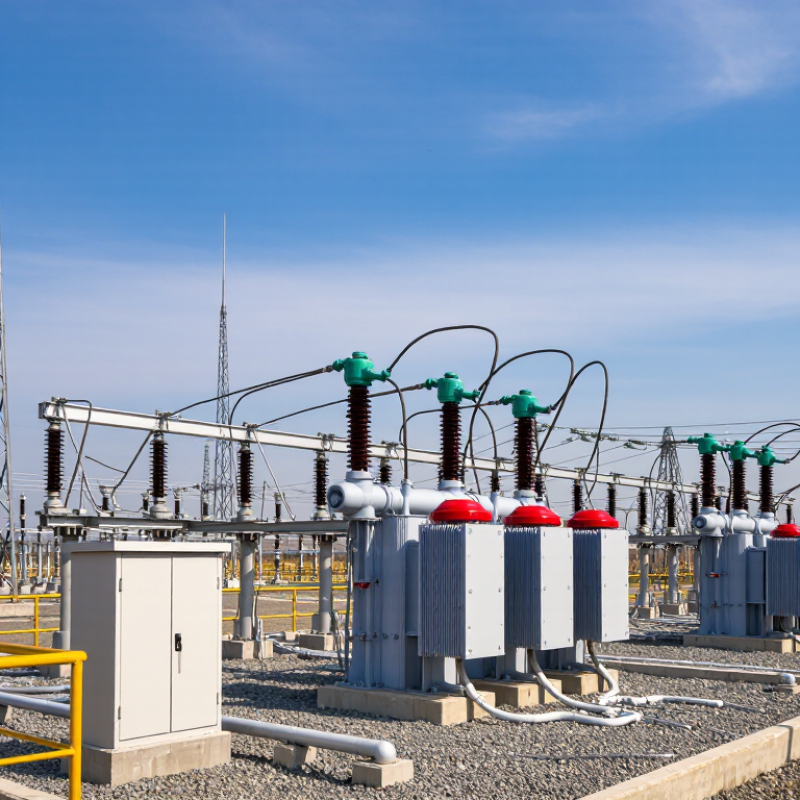
Top Outdoor Circuit Breaker Manufacturers in China

China’s Outdoor Circuit Breaker Manufacturing Landscape

China’s outdoor circuit breaker manufacturing landscape combines large production capacity with specialized engineering. Manufacturers serve utility grids, industrial parks, construction sites, and renewable energy projects. Many factories develop molded-case and air circuit breakers for outdoor distribution cabinets, feeder pillars, and pole-mounted equipment.

Production often benefits from dense electrical supply chains. Metal stamping, injection molding, contact materials, sensors, and enclosure fabrication can be sourced within nearby industrial regions. This shortens delivery times and supports customized voltage, current, and enclosure requirements. Experienced engineering teams test temperature rise, insulation strength, short-circuit performance, and ingress protection. Compliance with IEC and applicable Chinese standards remains essential for serious export projects.

Field experience still matters.

A breaker may pass laboratory tests yet perform poorly under dust, salt mist, or repeated switching. Reliable suppliers therefore use sealed mechanisms, corrosion-resistant hardware, and UV-stable insulating materials. Factory audits should examine calibration records, traceability labels, aging tests, and sample reports. Some manufacturers still rely too heavily on final inspection, which is a weakness worth questioning. Process control should begin with incoming materials and continue through assembly.

Buyers should also review spare-part availability, technical drawings, and after-sales response. Outdoor installations are difficult to access, especially on remote feeders or rooftop systems. Clear trip curves and maintenance instructions can prevent costly delays. The strongest Chinese suppliers combine scalable production with practical application knowledge, although capability can vary sharply between factories. That's easy to overlook.

Key Product Types and Technical Features

Top Outdoor Circuit Breaker Manufacturers in China

Key Product Types and Technical Features

China’s outdoor circuit breaker industry covers several practical product types. Vacuum circuit breakers suit medium-voltage networks, substations, and industrial feeders. They interrupt current inside sealed vacuum interrupters, reducing fire risk and maintenance needs. SF6 circuit breakers support higher voltage applications and strong insulation performance. However, gas handling requires careful sealing, monitoring, and trained service personnel.

Pole-mounted breakers are compact and useful for rural distribution lines. They often include automatic reclosers, current sensors, and remote communication modules. Dead-tank and live-tank designs serve larger substations, with different insulation layouts and maintenance requirements. Selection should match voltage, fault current, switching frequency, altitude, and local weather conditions. A unit facing coastal air needs stronger corrosion protection. A high-altitude site may require adjusted insulation distances.

Technical reliability depends on more than the interrupter. Buyers should check mechanical endurance, opening time, closing time, contact wear, and temperature-rise data. Enclosure sealing also matters during dust, rain, and ice exposure. Many manufacturers provide type-test reports based on applicable IEC or national standards. Still, paperwork is not field experience. Factory inspection, sample testing, and spare-parts support deserve equal attention. One overlooked issue is control-power stability. A breaker may perform well in a laboratory but respond slowly after voltage dips. That gap needs honest testing.

Leading Chinese Manufacturers and Their Specializations

China’s outdoor circuit breaker sector serves expanding transmission, renewable, and industrial networks. The IEA Electricity 2024 report projects average global electricity demand growth of about 4% annually through 2026. China’s grid investment is therefore moving toward higher capacity and stronger weather resistance.

Leading Chinese manufacturers usually specialize by voltage class and application. Large engineering manufacturers focus on 126–550 kV outdoor breakers, GIS interfaces, and high-altitude substations. Their products commonly use spring or hydraulic mechanisms, porcelain or composite insulators, and factory-tested operating sequences. Medium-voltage specialists often produce 12–40.5 kV vacuum circuit breakers for factories, solar parks, and urban distribution cabinets. Some export-focused factories emphasize compact dimensions, corrosion-resistant coatings, and customized control voltages.

Technology choices are changing. IEC 62271-100 remains a key reference for high-voltage alternating-current breaker performance, including type tests and mechanical endurance. China Electricity Council data placed national power-generation capacity above 3.3 billion kW at the end of 2024, increasing pressure for dependable switching equipment. Yet capacity figures do not prove field reliability. That distinction matters.

A buyer should inspect short-circuit ratings, temperature-rise records, enclosure sealing, and maintenance access. Ask for recent test reports, not only polished brochures. I would also verify performance in rain, dust, icing, and repeated remote operations. Some suppliers claim very long service intervals. Field conditions can be less kind. The better evaluation includes witnessed testing, spare-part planning, and clear documentation in English.

Top Outdoor Circuit Breaker Manufacturers in China - Leading Chinese Manufacturers and Their Specializations

Manufacturer Profile Primary Specialization Common Product Types Typical Voltage Range Applicable International Standards Typical Application Areas Key Manufacturing Strengths
Distribution Vacuum Circuit Breaker Manufacturer Outdoor medium-voltage vacuum interruption technology for utility and industrial distribution networks. Outdoor Vacuum Circuit Breakers, pole-mounted vacuum breakers, recloser-compatible breakers and sectionalizing equipment. 12 kV, 24 kV, 36 kV and 40.5 kV classes are commonly available. IEC 62271-100, IEC 62271-111, IEC 62271-200 and relevant Chinese GB/T standards. Overhead distribution lines, substations, industrial plants, commercial facilities and renewable-energy collection systems. Compact pole-mounted designs, motorized operating mechanisms, low maintenance requirements and integration with remote-control systems.
Automatic Recloser Manufacturer Automatic fault interruption and service restoration for overhead medium-voltage distribution networks. Single-tank vacuum reclosers, three-phase reclosers, control cabinets and line-protection packages. Typically 12 kV, 15 kV, 24 kV, 27 kV and 38 kV classes, depending on the export market. IEC 62271-111, IEEE C37.60 and applicable utility protection requirements. Rural feeders, long overhead lines, storm-prone networks, distributed generation and smart-grid projects. Programmable protection curves, fault indication, communications interfaces, battery-backed controls and remote monitoring.
Medium-Voltage Outdoor Load-Break Switch Manufacturer Load switching, feeder isolation and visible system sectionalizing without full circuit-breaker functionality. Outdoor load-break switches, air-break switches, vacuum load switches and fused switching units. Commonly 12 kV, 24 kV, 36 kV and 40.5 kV classes. IEC 62271-103, IEC 62271-105 and corresponding national standards. Feeder isolation, transformer protection, overhead line segmentation and compact substations. Simple construction, visible isolation options, corrosion-resistant enclosures and flexible fuse-switch configurations.
Outdoor SF6 Circuit Breaker Manufacturer High-voltage switching and fault interruption using sealed SF6 insulation and arc-quenching technology. Outdoor high-voltage SF6 circuit breakers, dead-tank breakers and live-tank breaker assemblies. 72.5 kV, 126 kV, 145 kV and higher voltage classes are used in transmission applications. IEC 62271-100, IEC 62271-1 and related high-voltage type-test requirements. Transmission substations, utility interconnections, industrial substations and renewable-energy grid connections. High dielectric strength, high interrupting capacity, modular pole assemblies and suitability for severe electrical duties.
High-Voltage Vacuum Circuit Breaker Manufacturer Vacuum interruption for selected high-voltage and specialized switching applications where low environmental impact is required. Outdoor high-voltage vacuum circuit breakers, generator breakers and vacuum switching assemblies. Products are available in selected medium- and high-voltage classes; exact ratings depend on the design and test program. IEC 62271-100, IEC 62271-101 and applicable national high-voltage testing standards. Industrial power systems, renewable-energy facilities, generator connections and applications seeking SF6-free switching. Low operating noise, reduced gas-handling requirements, long electrical endurance and environmentally preferable interruption technology.
Customized Outdoor Circuit Breaker OEM Manufacturer Project-specific engineering, private-label production and adaptation to local utility or export-market specifications. Pole-mounted breakers, reclosers, switchgear modules, control cabinets and complete outdoor switching packages. Usually configured from 12 kV to 145 kV, subject to product design, insulation level and certification requirements. IEC, IEEE and GB/T standards can be supported according to the target market and procurement specification. Utility tenders, EPC projects, export distribution networks, mining operations and industrial infrastructure. Flexible mechanical interfaces, customized control logic, multilingual documentation, type-test coordination and batch production.

Note: The entries describe common capability profiles in the Chinese outdoor circuit-breaker manufacturing sector rather than individual companies or brands. Exact ratings, certifications and test reports should be verified against the supplier’s current technical documentation.

Quality Standards, Testing, and Certification Requirements

Top Outdoor Circuit Breaker Manufacturers in China

Quality begins with standards, not catalog claims. For outdoor low-voltage products, buyers should check IEC 60947-2 compliance. Medium- and high-voltage breakers usually follow IEC 62271-100 and IEC 62271-1. These standards define insulation levels, temperature rise, operating performance, and short-circuit duties. The IEA’s Electricity Grids and Secure Energy Transitions report estimates that annual global grid investment must exceed 600 billion dollars by 2030. That pressure makes reliable switching equipment increasingly important.

Testing should match the actual installation. A credible Chinese manufacturer can provide type-test reports covering short-circuit interruption, dielectric withstand, mechanical endurance, and temperature rise. Outdoor designs also need enclosure protection, corrosion resistance, sealing, and operation after repeated rain and dust exposure. Factory routine tests should verify every production unit, not only a sample. Ask for calibrated equipment records and traceable test procedures.

Certification still requires careful review. Market access may involve national approvals, third-party laboratory reports, and conformity documents for the destination country. ISO 9001 supports process control, but it does not prove product performance. A certificate alone is not enough. Inspect the report scope, model range, test voltage, and validity date. One practical weakness remains: some suppliers present outdated reports without explaining design changes. Factory audits, witness testing, and sample verification can expose that gap. Small details matter.

How to Select a Reliable Outdoor Circuit Breaker Supplier

How to Select a Reliable Outdoor Circuit Breaker Supplier

Demand for grid equipment is rising. The IEA’s Electricity Grids and Secure Energy Transitions report says annual grid investment must exceed $600 billion by 2030. This pressure makes supplier selection more important, especially for outdoor breakers exposed to rain, dust, salt, and sunlight. Fortune Business Insights also projects the global circuit breaker market to grow from about $8.7 billion in 2023 to $14.2 billion by 2032. Growth alone does not prove quality.

Check the supplier’s test evidence before comparing prices. For medium- and high-voltage products, request type-test reports aligned with IEC 62271 standards. For low-voltage breakers, verify IEC 60947-2 compliance. Ask for short-circuit, temperature-rise, mechanical endurance, ingress-protection, and salt-mist results. Reports should identify the exact model, rating, test laboratory, and issue date. An ISO/IEC 17025-accredited laboratory adds credibility. It is not a guarantee.

Inspect production details too. Confirm copper or aluminum grades, contact materials, sealing design, coating thickness, and spare-part availability. Request traceability from batch number to final inspection. A factory audit can reveal weak calibration control or rushed assembly. A low quotation may hide expensive replacement delays. I have learned that sample testing is useful, but one sample cannot represent every production batch. Require routine-test records, clear warranty terms, and a practical response time for technical support.

Go to Top