How to Choose the Right AC DC Power Supply for Your Needs?
Choosing the right AC/DC Power Supply is crucial for ensuring your devices operate properly. A power supply can affect the performance and lifespan of your equipment. Different applications require specific power outputs, voltages, and currents. Understanding these requirements is vital before making a decision.
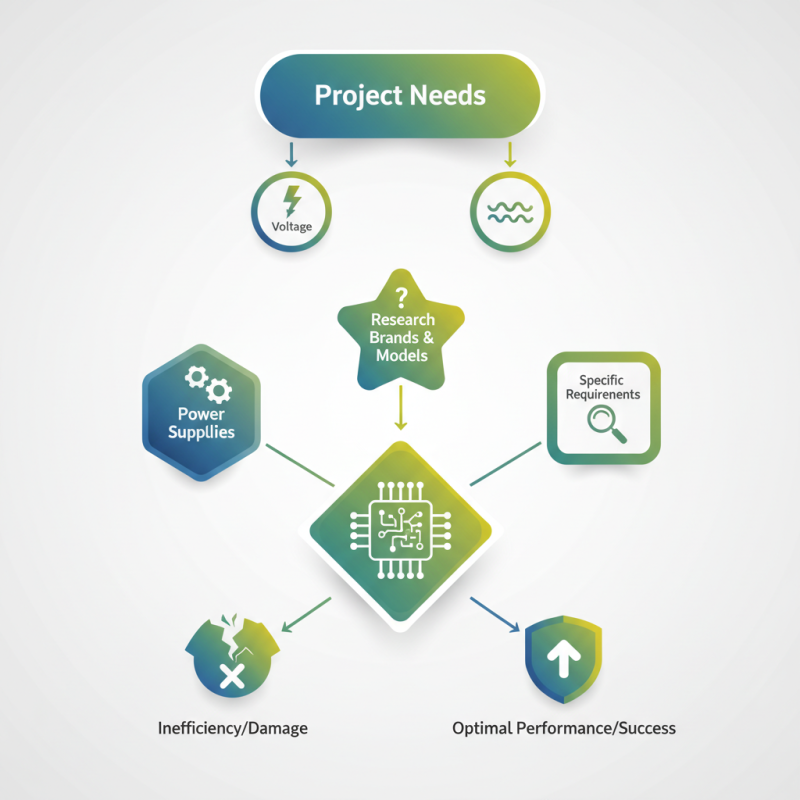
When selecting an AC/DC Power Supply, consider the power needs of your project. Look at the voltage and current specifications carefully. Generic power supplies may not meet your unique demands. It’s easy to overlook these details, but doing so could lead to inefficiency or even damage.
Assessing your options can be overwhelming. There are numerous brands and specifications available. You may find it hard to know which one truly fits your needs. Reflecting on your requirements and researching different models will help you make an informed choice. Choose wisely, as the right AC/DC power supply can make all the difference in your project's success.
Understanding the Basics of AC and DC Power Supply Systems
Understanding AC and DC power systems is crucial for selecting the right power supply. AC, or alternating current, is the standard form of electricity supplied to homes and businesses. It oscillates, changing direction periodically. In contrast, DC, or direct current, flows in one direction. This fundamental difference impacts their applications.
Data from industry reports indicate that about 60% of electronic devices operate on DC power. These devices include smartphones, laptops, and many electronic circuits. Recognizing this dependency is essential when choosing a power supply. However, many users overlook the need for the right voltage and current ratings. Using incorrect specifications can lead to device failure, decreased efficiency, or safety hazards.
Choosing between AC and DC also involves understanding conversion methods. While it’s possible to convert AC to DC, this process incurs energy losses. Recent studies show that efficiency can drop by 10% or more during conversion. This fact highlights the importance of matching power supply types with application needs. It is vital to assess whether the extra effort in conversion aligns with project requirements. Users often muddle through these decisions, leading to costly mistakes.
How to Choose the Right AC DC Power Supply for Your Needs?
| Parameter | AC Power Supply | DC Power Supply |
| Voltage Range | 100V - 240V AC | 0V - 50V DC |
| Output Type | Single Phase | Multiple Options (Fixed/Adjustable) |
| Ripple Voltage | Less than 10% RMS | Less than 1% RMS |
| Cooling Method | Air-Cooled | Fan or Passive Cooling |
| Size | Larger Units | Compact Units |
| Cost | Generally Lower | Generally Higher |
Identifying Your Power Requirements: Voltage and Current Needs
When selecting an AC DC power supply, understanding your voltage and current needs is critical. Voltage is often expressed in volts (V), while current is quantified in amperes (A). The right combination ensures optimal performance of your devices. According to industry reports, insufficient voltage can lead to device malfunctions. Likewise, inadequate current could cause overheating.
When specifying your power needs, remember the rule of thumb: devices often require 20% more current than their rated usage. This buffer accounts for peak demands and avoids potential breakdowns. It's also essential to consider the input voltage range. Many supplies offer a wide range, but if your equipment demands a specific voltage, mismatch can occur.
Tip: Calculate your total power needs by multiplying voltage by current. For example, a device requiring 12V and 1A needs 12 Watts. Always double-check input specifications to avoid surprises.
Overlooked factors can lead to inefficiencies. Regularly reassess your requirements as technology and devices evolve. Choosing the correct power supply is more than a numeric choice; it’s about compatibility and reliability. Aim to analyze various options. A hasty decision can lead to costly mistakes later.
Evaluating Efficiency Ratings and Performance Standards
Choosing the right AC DC power supply is essential for optimal performance. Efficiency ratings are crucial in this decision-making process. The efficiency rating indicates how much input power is converted into useful output. A higher efficiency rating means less wasted energy and reduced heat generation. This can lead to lower electricity bills over time.
When evaluating performance standards, consider the load requirements. An underperforming power supply may lead to device failures or degraded performance. It's important to assess the power needed by your devices. Check the voltage and current specifications carefully. Small discrepancies can lead to malfunctioning equipment. Don't overlook the importance of safety certifications. They ensure your selected power supply meets necessary guidelines.
Identifying your needs is not a straightforward task. Many factors come into play, such as the type of devices and their energy demands. It may take time to find the best match. Be prepared to revisit your choices as technology evolves. Your initial selection may not always be the best long-term solution. Adjustments may be necessary to maintain efficiency as new standards emerge.
Comparing Different Types of AC DC Power Supplies
When selecting an AC DC power supply, it's important to understand the various types available. Each type has unique features and applications suited for different environments. Linear power supplies offer low noise, ideal for sensitive electronics. However, they are often bulky and inefficient, especially for high power demands. Switching power supplies are lighter and more efficient but can introduce electrical noise, affecting some devices.
Tips: Check the voltage and current ratings carefully. Overloading can lead to failure. Also, consider thermal management, as poor heat dissipation may shorten the lifespan of your supply.
Another option is programmable power supplies, which offer flexibility for testing purposes. They allow for adjustments in voltage and current output but can be more complex to use. Users may find themselves struggling with setup. It’s essential to have a basic understanding of electronics before choosing this type.
Tips: Always examine the efficiency rating. A higher efficiency means less heat and better performance. Also, think about future needs. Would you require adjustable features later? Planning ahead can save you money and hassle down the road.
Power Supply Comparison: AC vs DC
Considering Safety Features and Regulatory Compliance
When selecting an AC DC power supply, safety features and regulatory compliance are crucial. Electrical safety standards vary across regions. Thus, understanding the compliance requirements is essential. For example, UL standards in the US ensure products meet specific safety criteria. Compliance with these regulations can prevent electrical hazards, ensuring safe operation in various applications.
Many power supplies feature built-in protection against overvoltage and short-circuit conditions. This protects both the device and the user. However, not all products offer the same level of safety. A report by the International Electrotechnical Commission indicates that nearly 30% of electrical failures stem from inadequate protective measures. It’s important to assess the datasheets of power supplies to verify safety features.
**Tips:** Look for certifications like CE or FCC. They indicate compliance with safety standards. Additionally, always check for cooling capabilities. Overheating can lead to device failure. Prioritize power supplies that offer effective thermal management even if they come at a higher cost. Investing in quality can save money in the long run by reducing failures. Also, remember that ignoring these aspects may lead to losses, as safety cannot be compromised.