
10 Best Light Beam Lamps for Buyers in 2026

Choosing among the 10 Best Light Beam Lamps for Buyers in 2026 starts with a simple question: where should the light land? A narrow beam can pick out a painting, brighten a workbench, or create a crisp pool on a reading chair. The same beam may feel harsh when aimed at a glossy surface. Small details matter. Beam angle, brightness, color quality, and dimming range shape how a lamp performs in a real room.

Architect Louis Kahn, whose work made light central to the experience of space, observed, “The sun never knew how great it was until it hit the side of a building.” His words capture an important point: light is judged by what it reveals. For buyers, that means looking beyond attractive product photos. Check whether the beam can be adjusted, whether the controls feel practical, and whether the lamp’s materials and heat management suit regular use.

This guide compares Light Beam Lamps across everyday needs, from focused task lighting to adjustable accent illumination. It considers beam control, build quality, ease of installation, and value, while noting where product specifications may not tell the whole story. A listed brightness figure cannot predict every room’s result. Not every room agrees. Wall color, ceiling height, and placement can change the effect, so treat recommendations as a starting point—not a promise.
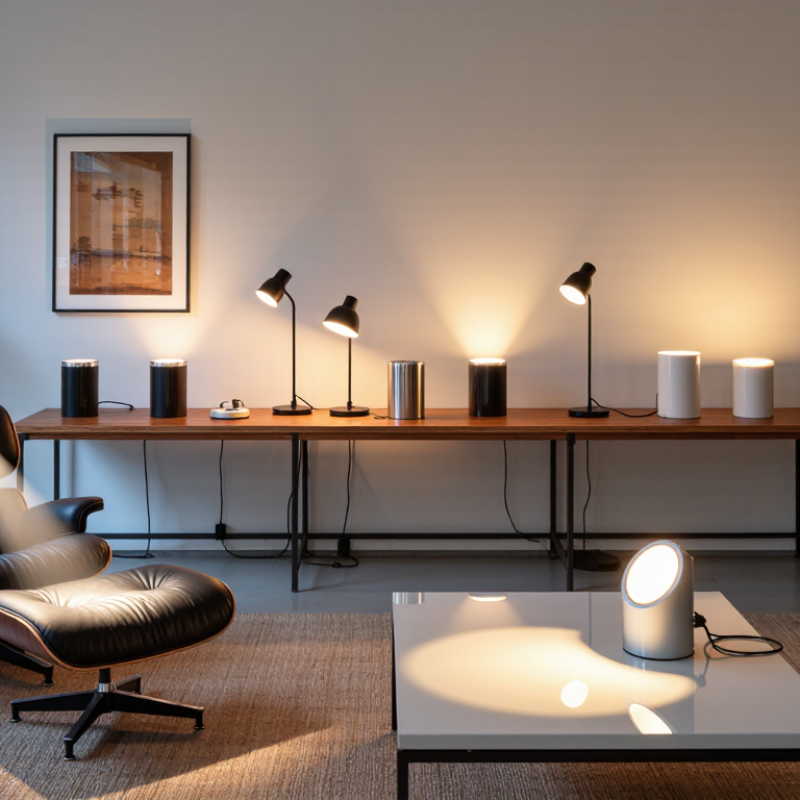
10 Best Light Beam Lamps for Buyers in 2026

Understanding Light Beam Lamps and Their Main Uses

Light beam lamps shape where light lands, rather than simply brightening an entire room. Their beam angle describes how widely light spreads: a narrow beam creates a focused pool, while a wider beam covers more surface. This makes them useful for reading, highlighting artwork, illuminating workbenches, or adding direction to a room. Aim matters. A bright spot on glossy paper can cause glare, and a poorly placed lamp may leave hands casting shadows.

For practical selection, consider beam spread, mounting height, dimming, and color quality together. A narrow beam can suit a small display, but it may feel harsh on a desk. The U.S. Department of Energy’s Energy Saver guidance reports that LED bulbs use up to 90% less energy and last up to 25 times longer than incandescent bulbs. Those figures describe bulbs, not every complete lamp, so fixture design and operating conditions still matter.

At a desk, test the beam on the actual page, not just the wall. Notice whether light reaches the keyboard and notes without shining into your eyes. Small details count. For galleries or retail shelves, adjustable heads help direct light as layouts change. One common mistake is assuming a tighter beam always means better precision. It can instead create distracting bright patches, especially on reflective surfaces. A beam lamp should fit the task and the space, not merely look technical.

Key Features to Compare Before Buying a Light Beam Lamp

When comparing light beam lamps, look beyond advertised brightness. Check beam angle, illuminance, and whether the head can tilt without drifting. A narrow beam can suit close-up work, but it may leave the edges of a desk dim. IES lighting guidance emphasizes matching light distribution to the task; a bright spot is not the same as even, usable light. Test the lamp where you plan to use it, if possible.

Color quality matters, too. For reading or detailed work, compare color rendering index (CRI) and correlated color temperature (CCT), not just the product photos. ENERGY STAR’s lighting guidance says qualified LED products can use up to 90% less energy than traditional incandescent lighting. Still, efficiency alone will not make a lamp comfortable. Look for dimming that stays stable at low settings, accessible controls, and a diffuser that limits direct glare. Small detail. Big difference.

Ask for measured flicker information when available; a phone camera’s rolling bands are not a dependable test. Also compare heat near the lamp head, cable reach, base stability, and replacement-part availability. A high CRI number is not everything: the beam may still feel harsh on glossy paper or a pale wall. I would not choose from specifications alone. Living with a lamp reveals annoyances that a product sheet often misses.

10 Best Light Beam Lamps for Buyers in 2026 — Key Features to Compare Before Buying a Light Beam Lamp
Lamp Type Typical Beam Angle Best Suited For Key Features to Compare Potential Trade-Off
LED track spotlight About 15°–40°, depending on the optic Retail displays, galleries, and focused room lighting Track compatibility, adjustable head, dimming method, color temperature, and whether the beam is fixed or adjustable Track systems are not universally interchangeable; check the track standard before buying.
LED PAR spotlight Commonly about 15°–60°, depending on lens and model Small stages, events, and general colored wash lighting Beam angle, color mixing, fan noise, flicker performance, DMX support, and power connection A wide wash may not create a sharply defined beam or a precise-edged projection.
Moving-head beam fixture Often a narrow beam, roughly 2°–10° Concerts, clubs, and events needing moving aerial effects Beam angle, pan and tilt range, DMX channels, cooling noise, fixture weight, and power requirements Narrow beams are most visible in suitable atmospheric conditions and may be too intense for close-range use.
LED profile spotlight Varies by lens; interchangeable lenses can provide different angles Theatre, presentations, and precise illumination of a subject or area Lens angle, shutter or framing system, focus range, color rendering, and accessory compatibility Optics and framing accessories can add cost and setup complexity.
Pinspot Typically a very narrow beam, often around 3°–10° Highlighting small objects, tables, or stage details Beam diameter at the intended distance, focus adjustment, dimming, and mounting options A narrow beam covers only a small area; accurate aiming is important.
Architectural narrow-beam spotlight Often about 5°–20°, depending on the optic Building features, landscape accents, and long-distance highlighting Outdoor protection rating, beam spread, mounting hardware, glare control, and operating temperature range Confirm the fixture is rated for its installation environment; indoor and outdoor models are not interchangeable.
LED gobo projector Depends on the lens; commonly available in narrow to medium spreads Projecting patterns, logos, or shapes onto walls and floors Gobo size and material, lens options, focus distance, rotation, brightness, and cooling Projection sharpness and size change with lens choice and throw distance.
Battery-powered event spotlight Usually varies by model and fitted lens Temporary events and locations without convenient mains power Runtime at the selected brightness, recharge time, wireless control, mounting method, and battery replacement Maximum output and runtime are often linked; check runtime at the brightness level you plan to use.
LED accent spotlight Commonly about 10°–40°, depending on the optic Home displays, artwork, shelves, and small feature areas Dimming range, color temperature, color rendering, glare control, and installation method A fixed-beam model may not suit a space if the display or mounting position changes.
Zoomable LED spotlight Adjustable within the model's stated zoom range Users who need to change coverage without swapping fixtures Minimum and maximum beam angles, focus uniformity, zoom control, output across the range, and locking mechanism Beam shape or brightness can vary across the zoom range; review manufacturer photometric data where available.

Note: Beam-angle ranges are indicative examples for these fixture categories, not guaranteed specifications. Actual beam angle, output, controls, and power requirements vary by model; check the product datasheet and installation requirements before purchase.

Ten Light Beam Lamps Worth Considering in 2026

Ten light beam lamps worth considering in 2026 serve different spaces and routines. A narrow-beam task lamp puts focused light on sketchbooks or small repairs. A wide-beam desk lamp spreads illumination across a keyboard. Adjustable-arm models help redirect light as work shifts. Clamp lamps save desk space, while linear bar lamps suit long tables. Check that joints stay steady and the beam does not glare off a screen.

For reading, a floor lamp with a directed head can light a page without brightening the whole room. Wall-washing lamps soften hard shadows across a blank wall. Track-mounted spotlights offer flexible aiming for displays or work areas. Portable rechargeable lamps are handy on shelves, though battery life varies with brightness. Daylight-balanced studio lamps can reveal color more consistently for drawing or close-up projects. Dimmable models add control, but their lowest setting may still feel too bright.

Before choosing, compare beam spread, color rendering, and stated light output. A high output number alone does not promise comfortable light. Test the lamp from your usual seated position, especially if its beam crosses a glossy surface. Look for stable construction and accessible controls. I have found that a promising lamp can still disappoint when its switch is awkward. Small detail. The right choice depends on the task, room, and distance from the surface.

How to Choose a Lamp for Your Space and Budget

Start with the task, not the lamp. A narrow beam can bring out the grain in a wooden shelf, while a wider beam works better over a reading chair or work surface. Measure the area and note the distance from lamp to target. A beam that looks gentle in a shop may feel harsh when aimed at a pale wall at home. Test the direction before settling on a fixed position.

Check brightness, beam angle, and color temperature together. Lumens indicate light output, but they do not tell you how concentrated the beam will feel. For reading, look for even light across the page, with little glare in your eyes. A dimmer can help when one space serves several purposes. Warm or neutral white light often feels more comfortable in living areas; personal preference matters, too.

Set a budget that includes bulbs, mounting parts, and any needed dimmer, not just the lamp. Compare build quality and whether the light source can be replaced. On a tight budget, prioritize stable mounting and useful adjustment over decorative extras. I would not assume a higher price guarantees better light.

I once thought a brighter beam would solve a dim corner; it only made the wall look stark. Try the lamp at the actual reading distance, preferably after dark. A small test saves regret.

Installation, Operation, and Light Beam Safety

Mount a light beam lamp on a stable surface or rated bracket, then aim it at the task rather than eye level. Keep cables clear of walkways, and leave space around vents so heat can escape. Tighten the mount before switching the lamp on. Small shifts matter. A beam that looks harmless on a blank wall can cause discomfort when it catches polished metal or glass. Check the manual for working distance, dimming limits, and any required protective measures; beam shape alone does not show how bright or safe a source is.

For LED-based models, the U.S. Department of Energy reports that LEDs use at least 75% less energy and can last up to 25 times longer than incandescent lighting. Those figures concern LED lighting generally, not every beam lamp, so compare product specifications before buying.

For optical exposure, IEC 62471 assesses lamp safety using risk groups from RG0 to RG3. Look for a stated classification when available, and avoid staring into a direct beam, even briefly. Never stare into it.

I would also recheck the aim after moving furniture; reflections are easy to overlook, and a careful setup can still need adjustment.

Go to Top